

ERP Readiness Checklist: Prepare Your Business for Seamless Transformation
Prepare Your Organization for ERP Implementation Success

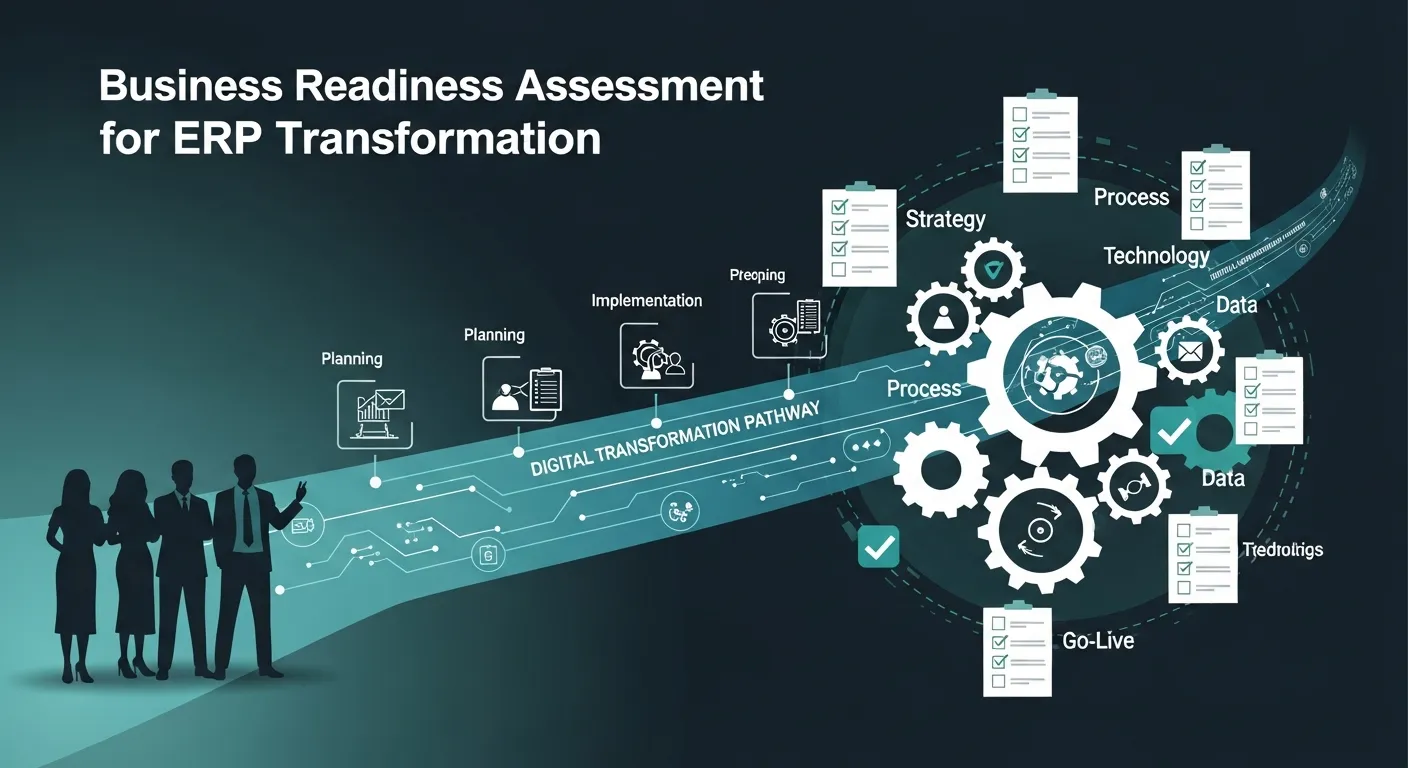
Did you know that over 50% of ERP implementations experience significant disruption, with inadequate preparation cited as the primary cause? An ERP transformation is one of the most impactful investments a business can make, but without proper readiness, it can quickly become a costly nightmare.
Whether you're implementing your first ERP system or upgrading an existing one, a comprehensive readiness checklist ensures nothing falls through the cracks. From organizational alignment and budget planning to data migration and change management, every detail matters when it comes to a seamless transformation.
This guide walks you through 15 essential steps that cover every aspect of ERP readiness, helping you avoid common pitfalls and set your business up for long-term success.
15 Essential Steps to Implementation Success
A successful ERP implementation starts long before the software is installed. The preparation phase is where the foundation is built, and cutting corners here almost always leads to problems down the road. Here are the 15 critical steps every organization should complete before going live:
- Organizational Assessment
- Budget Planning and Timeline
- Data Management and Integration
- Business Process Reengineering
- IT Infrastructure Assessment
- Project Team Formation
- Risk Assessment and Compliance
- Change Management Strategy
- Testing and Quality Assurance
- Go-Live Planning
- Post-Implementation Evaluation
- Scalability and Future-Proofing
- Vendor Management
- Knowledge Transfer
- Continuous Improvement
1. Organizational Assessment
Before selecting any ERP system, you need a clear picture of where your organization stands today. An honest organizational assessment reveals strengths to build on and gaps that need to be addressed before implementation begins.
- Conduct a comprehensive review of current business processes across all departments to identify inefficiencies, bottlenecks, and areas for improvement.
- Evaluate organizational readiness for change by assessing employee attitudes, leadership commitment, and the company's history with technology adoption.
- Identify key stakeholders and decision-makers across all functional areas who will be impacted by or involved in the ERP implementation.
- Document existing workflows, pain points, and manual workarounds that the new ERP system should address or eliminate.
- Assess the current technology landscape, including legacy systems, third-party integrations, and custom applications that may need to interface with the new ERP.
2. Budget Planning and Timeline
Budget overruns are one of the most common reasons ERP projects fail. A realistic budget and timeline set expectations across the organization and help prevent scope creep from derailing your implementation.
- Develop a detailed total cost of ownership (TCO) analysis that includes software licensing, hardware upgrades, consulting fees, training costs, and ongoing maintenance.
- Establish a realistic implementation timeline with clear milestones, deliverables, and dependencies mapped out across all project phases.
- Allocate contingency funds of at least 15-20% of the total project budget to account for unexpected challenges, scope changes, and unforeseen requirements.
Beyond the initial budget, it's equally important to plan for the long-term financial commitment that comes with ERP ownership.
- Create a resource allocation plan that accounts for internal staff time dedicated to the project, including backfill plans for employees pulled from their regular duties.
- Define clear ROI metrics and payback period expectations so that the organization can measure the financial success of the implementation over time.
3. Data Management and Integration
Data is the lifeblood of any ERP system. Poor data quality is one of the fastest ways to undermine an otherwise well-planned implementation, making data management a top priority from day one.
- Perform a thorough data audit to assess the quality, completeness, and accuracy of existing data across all systems that will feed into the new ERP.
- Develop a comprehensive data cleansing strategy to eliminate duplicates, correct errors, standardize formats, and archive obsolete records before migration.
- Create a detailed data migration plan that specifies what data will be migrated, the mapping between old and new systems, and the validation procedures to ensure accuracy.
Integration complexity often catches organizations off guard. Planning your integration architecture early prevents costly surprises during implementation.
- Map all integration points between the ERP and existing systems, including CRM, e-commerce platforms, supply chain tools, and financial reporting software.
- Establish data governance policies and assign data stewards responsible for maintaining data quality standards throughout and after the implementation process.
4. Business Process Reengineering
An ERP implementation is the perfect opportunity to rethink and optimize how your business operates. Simply digitizing broken processes won't deliver the transformation you're looking for.
- Map current state (as-is) processes for every department that will use the ERP, documenting each step, decision point, handoff, and approval in detail.
- Design future state (to-be) processes that leverage ERP best practices and eliminate unnecessary steps, manual interventions, and redundant approvals.
- Identify gaps between current processes and ERP system capabilities, and determine whether to customize the software or adapt the business process.
- Engage department heads and process owners in redesign workshops to ensure new workflows are practical, efficient, and aligned with operational realities.
- Document all process changes and create standard operating procedures (SOPs) that will serve as the foundation for training and ongoing operations.
5. IT Infrastructure Assessment
Your IT infrastructure must be capable of supporting the new ERP system's requirements. An infrastructure gap can lead to poor system performance, downtime, and frustrated users.
- Evaluate current server capacity, network bandwidth, and storage capabilities to determine if upgrades are needed to support the ERP system's performance requirements.
- Assess network infrastructure across all locations, including remote offices and mobile workers, to ensure reliable connectivity for cloud-based or hybrid ERP deployments.
- Review security infrastructure including firewalls, encryption protocols, access controls, and backup systems to meet the ERP system's security requirements.
- Determine hardware and software prerequisites specified by the ERP vendor and create a procurement plan for any required upgrades or new purchases.
- Plan for disaster recovery and business continuity by establishing backup procedures, failover mechanisms, and recovery time objectives specific to the ERP environment.
6. Project Team Formation
The right team can make or break an ERP implementation. A well-structured project team with clearly defined roles ensures accountability and keeps the project moving forward.
- Appoint an executive sponsor with the authority and influence to champion the project, remove roadblocks, and secure ongoing organizational support and resources.
- Select a dedicated project manager with ERP implementation experience who will be responsible for day-to-day project coordination, risk management, and stakeholder communication.
- Identify functional leads from each department who understand their area's processes deeply and can represent their team's needs during system configuration and testing.
- Recruit super users who will become the in-house ERP experts, providing first-line support to colleagues and serving as the bridge between IT and business teams.
- Define clear roles, responsibilities, and time commitments for all team members, ensuring they have adequate bandwidth to contribute meaningfully to the project.
7. Risk Assessment and Compliance
Every ERP implementation carries risks, but proactive identification and mitigation planning can prevent most issues from becoming project-threatening problems.
- Conduct a comprehensive risk assessment identifying potential technical, organizational, financial, and operational risks that could impact the implementation timeline or budget.
- Develop detailed mitigation strategies for each identified risk, including trigger points, response plans, and assigned owners responsible for monitoring and action.
- Review all applicable regulatory and compliance requirements, including industry-specific regulations, data privacy laws, and financial reporting standards the ERP must support.
- Establish a risk monitoring framework with regular review cadences to track emerging risks and assess the effectiveness of existing mitigation strategies.
- Create a comprehensive rollback plan that outlines the steps for reverting to legacy systems if critical issues arise during or immediately after go-live.
8. Change Management Strategy
Technology alone doesn't drive transformation — people do. A robust change management strategy addresses the human side of ERP implementation, which is often the most challenging aspect.
- Develop a stakeholder engagement plan that identifies all affected groups, assesses their level of impact, and outlines targeted communication strategies for each audience.
- Create a multi-channel communication plan that keeps the entire organization informed about project progress, upcoming changes, and how the ERP will benefit them personally.
- Design a comprehensive training program tailored to different user groups, with role-based curricula, hands-on exercises, and ongoing learning resources.
- Establish feedback mechanisms such as surveys, focus groups, and suggestion channels that allow employees to voice concerns and contribute ideas throughout the process.
- Identify and empower change champions across departments who can advocate for the new system, address peer concerns, and model positive adoption behaviors.
9. Testing and Quality Assurance
Thorough testing is the last line of defense against go-live failures. A structured testing approach catches issues when they're cheapest to fix and builds confidence in the system across the organization.
- Develop a comprehensive testing strategy that covers unit testing, integration testing, system testing, user acceptance testing (UAT), and performance testing phases.
- Create detailed test scripts and scenarios based on real business processes, including edge cases, exception handling, and high-volume transaction scenarios.
- Establish clear acceptance criteria and sign-off procedures for each testing phase, ensuring that stakeholders formally approve results before proceeding to the next phase.
- Plan for multiple rounds of testing with sufficient time for defect resolution, retesting, and regression testing to ensure fixes don't introduce new issues.
- Conduct performance and stress testing under realistic load conditions to verify the system can handle peak transaction volumes without degradation.
10. Go-Live Planning
The go-live event is the culmination of months of preparation. A detailed go-live plan ensures a smooth transition with minimal disruption to business operations.
- Create a detailed cutover plan with hour-by-hour tasks, responsible parties, and contingency procedures for every critical activity during the transition period.
- Define go/no-go criteria and establish a formal decision process with clear escalation paths for determining whether the organization is ready to proceed with launch.
- Plan the hypercare support structure with extended hours, dedicated resources, and rapid response protocols to address any issues that arise immediately after go-live.
- Develop a comprehensive communication plan for go-live day that keeps all stakeholders informed about system status, known issues, and available support channels.
- Schedule the go-live during a low-activity period to minimize business impact and allow sufficient time for the team to monitor system performance and address issues.
11. Post-Implementation Evaluation
The work doesn't stop at go-live. A structured post-implementation evaluation ensures the system delivers on its promises and identifies areas for optimization.
- Establish key performance indicators (KPIs) and baseline measurements before go-live so you can objectively measure the system's impact on business operations.
- Conduct a formal post-implementation review 30, 60, and 90 days after go-live to assess system performance, user adoption, and achievement of project objectives.
- Gather structured feedback from end-users across all departments to identify usability issues, training gaps, and opportunities for workflow optimization.
- Document lessons learned throughout the implementation process, including what went well, what could be improved, and recommendations for future projects.
- Create an optimization roadmap that prioritizes system enhancements, additional module deployments, and process improvements based on post-go-live findings.
12. Scalability and Future-Proofing
Your ERP system should grow with your business. Planning for scalability from the outset ensures your investment continues to deliver value as your organization evolves.
- Evaluate the ERP system's ability to scale with projected business growth, including support for additional users, transactions, locations, and business units.
- Assess the vendor's product roadmap and innovation strategy to ensure the platform will continue to evolve with emerging technologies and industry trends.
- Design the system architecture with modularity in mind, allowing for future additions of new modules, integrations, and functionality without major rearchitecting.
- Plan for potential geographic expansion by evaluating multi-currency, multi-language, and multi-entity capabilities that may be needed as the business grows internationally.
- Consider emerging technologies such as AI, machine learning, IoT, and advanced analytics that could enhance the ERP system's capabilities in the coming years.
13. Vendor Management
Your relationship with the ERP vendor and implementation partner is a long-term partnership. Setting clear expectations and communication protocols from the start leads to better outcomes.
- Establish clear contractual terms including service level agreements (SLAs), support response times, escalation procedures, and performance benchmarks with your ERP vendor.
- Define a structured vendor communication cadence with regular status meetings, progress reports, and issue tracking to maintain alignment throughout the implementation.
- Negotiate favorable licensing terms and understand the full cost structure including annual maintenance fees, upgrade costs, and charges for additional users or modules.
- Evaluate the vendor's support infrastructure including their help desk capabilities, knowledge base, community forums, and availability of certified consultants.
- Plan for vendor transitions by ensuring all documentation, configurations, and customizations are thoroughly recorded and accessible to your internal team.
14. Knowledge Transfer
Sustainable ERP success depends on your internal team's ability to manage and optimize the system independently. A structured knowledge transfer plan reduces long-term dependency on external consultants.
- Develop a formal knowledge transfer plan that outlines what knowledge needs to be transferred, from whom to whom, the timeline, and the methods to be used.
- Create comprehensive system documentation including configuration guides, customization records, integration specifications, and troubleshooting procedures.
- Build an internal center of excellence (CoE) with trained staff who can handle system administration, basic customizations, reporting, and first-level support.
- Establish a mentoring program that pairs experienced ERP users and consultants with newer team members to facilitate hands-on learning and skill development.
- Develop a training materials library with user guides, video tutorials, quick reference cards, and FAQs that employees can access on-demand for self-service learning.
15. Continuous Improvement
An ERP system is never truly "done." Organizations that treat implementation as a one-time event miss out on the ongoing value that continuous optimization can deliver.
- Establish a formal continuous improvement program with regular review cycles, defined metrics, and a structured process for identifying and implementing system enhancements.
- Create a prioritized backlog of system improvements, new feature requests, and optimization opportunities that are reviewed and updated on a quarterly basis.
- Monitor industry trends and vendor updates to identify new features, best practices, and emerging capabilities that could benefit your organization.
- Conduct regular user satisfaction surveys and process efficiency assessments to identify areas where the system can be better configured or utilized.
- Invest in ongoing training and development to ensure users stay current with system updates and continue to discover new ways to leverage the ERP's full capabilities.
ERP Readiness Assessment Tools
Having the right assessment tools in your toolkit can make the difference between a well-prepared implementation and one that's flying blind. These tools provide structure, objectivity, and measurability to what can otherwise be a subjective evaluation process.
Types of Assessment Tools
There are several categories of assessment tools that organizations can leverage during their ERP readiness evaluation:
- Comprehensive Checklists: Detailed, step-by-step guides that cover every aspect of ERP readiness, from organizational alignment to technical infrastructure. They ensure nothing is overlooked and provide a clear record of completion status.
- Readiness Questionnaires: Structured sets of questions designed to evaluate specific areas of readiness such as process maturity, data quality, and change management preparedness. They generate quantifiable scores that highlight strengths and weaknesses.
- Self-Assessment Scorecards: Weighted evaluation frameworks that allow organizations to rate their readiness across multiple dimensions on a standardized scale. Scorecards provide an at-a-glance view of overall preparedness and help prioritize attention areas.
- Gap Analysis Templates: Tools that compare your current state against the desired future state across key readiness dimensions. They clearly identify what needs to change and help quantify the effort required to bridge each gap.
- Readiness Dashboards: Visual tracking tools that aggregate data from multiple assessment sources into a single, real-time view of organizational readiness. Dashboards make it easy to communicate status to leadership and track progress over time.
Using Tools Effectively
Having the right tools is only half the battle. How you use them determines the value they deliver. Here are eight best practices for getting the most out of your ERP readiness assessment tools:
- Start Early: Begin your assessments at least 3-6 months before the planned implementation kickoff. Early assessment gives you time to address gaps without delaying the project timeline.
- Involve the Right People: Include representatives from every department that will use the ERP, as well as IT, finance, and executive leadership. Diverse perspectives produce more accurate and comprehensive assessments.
- Be Brutally Honest: Assessment tools only provide value when responses are candid. Encourage transparency by framing the assessment as a planning tool, not a performance evaluation.
- Use Multiple Tools: No single tool captures everything. Combine checklists with questionnaires and scorecards to build a complete picture of your organization's readiness across all dimensions.
- Prioritize Findings: Not all gaps are equally critical. Categorize findings by impact and urgency, focusing first on items that could delay or derail the implementation if left unaddressed.
- Create Action Plans: Every identified gap should have a corresponding action plan with a clear owner, timeline, required resources, and success criteria for resolution.
- Reassess Regularly: Readiness is not a one-time snapshot. Conduct periodic reassessments throughout the preparation phase to track progress and identify new risks as they emerge.
- Use Results to Guide Decisions: Let assessment data drive your project planning, resource allocation, and timeline decisions rather than relying on assumptions or political pressures.
Making the Most of Tools
To maximize the value of your assessment tools and ensure they deliver actionable insights, consider these advanced strategies:
- Customize to Your Context: Adapt generic assessment templates to reflect your organization's specific industry, size, complexity, and strategic priorities. Off-the-shelf tools are a starting point, not a final product.
- Use Industry-Specific Benchmarks: Compare your readiness scores against industry benchmarks and standards to understand how your preparation stacks up against organizations that have successfully implemented similar systems.
- Leverage Technology: Use digital assessment platforms and collaboration tools to streamline data collection, automate scoring, and enable real-time collaboration across distributed teams.
- Share Results Transparently: Publish assessment findings across the organization to build awareness, create urgency around gap remediation, and demonstrate the leadership team's commitment to a prepared implementation.
- Use as a Learning Tool: Treat the assessment process itself as an opportunity to educate teams about ERP concepts, implementation best practices, and the organizational changes ahead. The process is as valuable as the results.
Ensure Business Transformation
ERP readiness is not just about checking boxes — it's about fundamentally preparing your organization for a transformation that will touch every aspect of how you operate. The 15 steps outlined in this checklist provide a comprehensive framework for ensuring that your people, processes, technology, and data are all aligned and ready for change.
Organizations that invest adequate time and resources in the preparation phase consistently achieve better outcomes: faster implementations, higher user adoption, fewer disruptions, and greater ROI. The readiness checklist is your roadmap to joining their ranks.
Remember, the goal isn't perfection before you begin — it's awareness and preparedness. By honestly assessing your current state, identifying gaps, and creating actionable plans to address them, you set the stage for an ERP implementation that delivers lasting business value.
Start your readiness assessment today. The sooner you begin preparing, the smoother your transformation will be — and the sooner you'll start reaping the benefits of a modern, integrated ERP system that powers your business forward.